 Nagano Monkey Park Tours
What to Wear to the Snow Monkey Park
What to wear to the snow monkey park starts with your feet: the trail to Jigokudani is 1.6 km each way over unpaved ground that turns to compacted snow and ice from December through March, and the shop at the trailhead rents crampons and winter boots so you don't have to own them. The park sits at 850 m, January daytime highs run around 3°C, and the coldest part of the visit is standing still at the pool rather than the walk itself. Here is exactly what tours provide, what's on you, and what's worth leaving at the hotel.
Quick answer What the trailhead shop rents, and the one thing not to carry
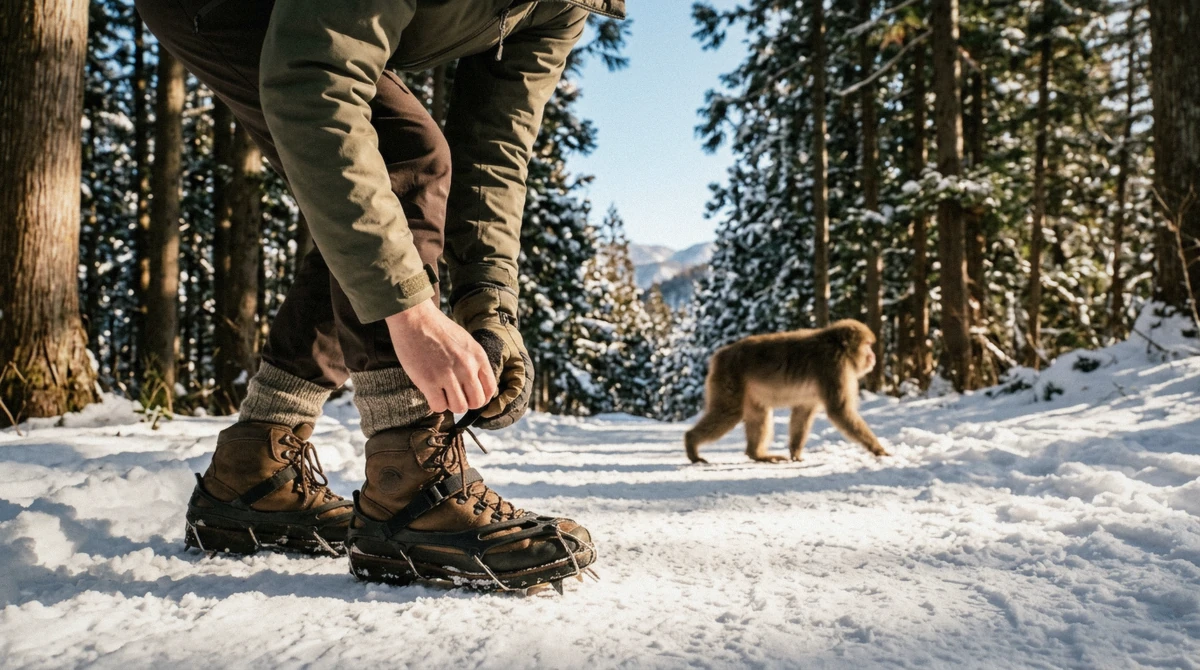
Waterproof winter boots and crampons for grip are the two items that matter most, and the trailhead shop rents boots and winter clothing and sells crampons, so you don't need to own either before you arrive. The trail is 1.6 km each way over compacted snow and ice from December through March, the park sits at 850 m, and January daytime highs run around 3°C with the real cold felt while standing still at the pool. The one hard warning: keep food and anything that looks like a plastic bag zipped away, since the monkeys read a visible bag as food.
Key takeaways
- Boots and winter clothing rent at the trailhead shop; crampons are sold, not rented, around ¥500 (about $3.50)
- The trail is 1.6 km each way, unpaved, and compacted snow and ice for most of December to March
- No heels, no sandals, no strollers, the terrain rules them out
- January daytime highs run around 3°C, with lows well below freezing after dark
- Waterproof, closed-toe boots with real tread are the footwear answer, no exceptions
- Guides on the coach tour from Shinjuku sell shoe spikes on board if you land without your own
Head to Toe for a Winter Visit
December through March is what most visitors are packing for, so this is the layering order that actually works on the trail and at the pool.
Base Layer
A thermal base layer, top and bottom, is worth packing over a single thick sweater. You will warm up fast on the walk in and cool down just as fast standing at the viewing area, and layers you can open at the collar or add a mid-layer over handle that swing better than one heavy garment.
Outer Layer
A waterproof, windproof jacket is the one non-negotiable outer piece. The valley holds real snow from December into March and the walk in and out means real exposure, not a quick dash from a car park. Add insulated or waterproof trousers over your base layer if you run cold; jeans underneath a shell jacket still leave your legs the coldest part of you.
Footwear
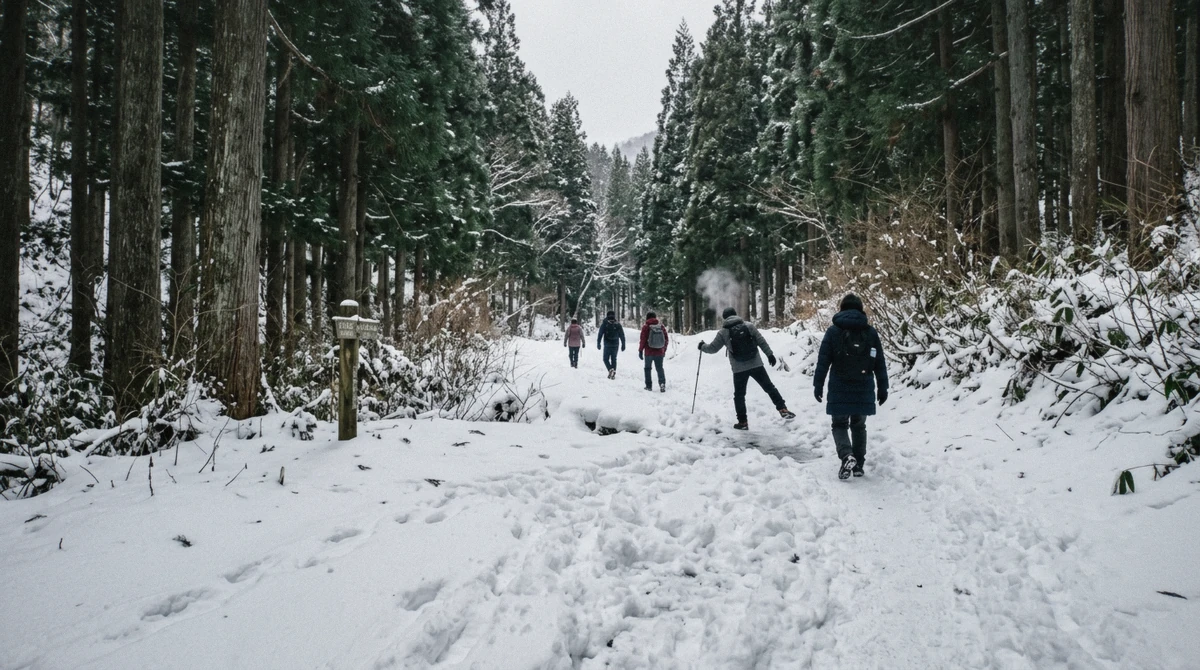
Waterproof, closed-toe boots with real tread are the answer, and they are not optional. The trail is 1.6 km each way, unpaved, and compacted snow and ice for most of the winter, and sneakers or fashion boots without grip turn a 25 to 40 minute walk into a slow, careful one. Heels and sandals are simply not workable on ice and unpaved forest ground, and strollers and wheelchairs cannot make the terrain either, so if you're travelling with a stroller plan to carry a child instead.
If you land without proper boots, the trailhead shop's Gift & Info Shop rents both boots and crampons for the walk, and guides on the coach tour from Shinjuku sell strap-on shoe spikes right on the bus.
Hands and Head
Waterproof gloves, a warm hat and a scarf or neck gaiter round out the winter kit. Bare hands go numb fast once you stop moving at the pool to watch the monkeys, and a hat matters more here than in most cold-weather destinations because you'll be standing still, not hiking, for a good part of the visit.
The full checklist below covers everything worth packing before you arrive, in the order it's easiest to forget.
- Waterproof winter boots, tread deep enough for compacted snow and ice
- Thermal base layer, top and bottom, under everything else
- Waterproof, windproof outer jacket, the one item not worth skipping
- Insulated or waterproof trousers, jeans alone get cold and wet fast
- Waterproof gloves, hands go numb fast standing still at the pool
- Warm hat and a scarf or neck gaiter, more time standing than walking
- Crampons or strap-on shoe spikes, sold at the trailhead shop if you don't bring your own
- Hand warmers, small and worth having for a long stop at the viewing deck
- A dry bag or waterproof pouch for your phone or camera
- Spare camera battery kept in an inner pocket, cold drains batteries fast
- Cash in small bills, some purchases at the trailhead shop are easier paid in yen
What the Trailhead Shop Provides
The Gift & Info Shop sits right at the Kanbayashi trailhead, before the 1.6 km walk in, and it covers the gear most visitors would otherwise show up without.
Last verified: August 2026.
| Item | Rent or Buy | Roughly | Notes |
|---|---|---|---|
| Winter boots | Rental | Around ¥500 (about $3.50) | Waterproof, treaded boots sized on the spot |
| Crampons / shoe spikes | Purchase | Small, take-home cost | Strap over your own boots for grip on ice |
| Winter clothing | Rental | Varies by item | Jackets and trousers available if you land underdressed |
| Warm base layers | Bring your own | N/A | Not stocked; pack a thermal top and bottom |
| Gloves and hats | Bring your own | N/A | Not standard rental stock; pack them |
| Park admission (¥800 (about $5.50) adult) | Purchase at gate | See our tickets guide | Covered on group tours; paid on-site on private tours |
| Dry bag or phone pouch | Bring your own | N/A | Not sold at the shop; pack one before you arrive |
| Shoe spikes on the bus | Purchase | Small, on-board add-on | Guides on the coach tour from Shinjuku sell them if you skip the trailhead shop |
The trade-off is honest: renting boots and buying crampons at the trailhead covers you completely, but it also means queuing at the shop before the walk in, which eats into your visit on a busy winter day. Travellers on the private day from Hakuba often arrive already kitted out from their lodge, which is one less stop to make at the trailhead.
What Not to Wear or Bring
A short list, sourced from the park's own rules and what tour operators actually turn people away for.
- Heels or dress shoes, no grip on ice and unpaved ground, and the operators that run this route ban them outright
- Sandals or flip-flops, the same problem as heels on a colder trail
- Strollers or wheelchairs, the unpaved terrain rules them out; carry young children instead
- Visible plastic bags or loose food, the monkeys read a plastic bag as food and will grab at it; keep bags zipped and out of sight
- Pets, including guide dogs, not permitted anywhere in the park
- Anything you'd mind losing to a curious monkey, they will investigate a dangling camera strap or an open pocket
None of these are arbitrary. A guide will stop a group at the gate over unsafe footwear before letting them start the walk, and the plastic-bag rule exists because a monkey grabbing at a bag near a crowd of visitors is how minor incidents happen. Pack light, zip everything, and the rest of the visit is straightforward.
Packing by Season
The short version by season, before the detail below.
| Season | Months | Typical High | Wear This |
|---|---|---|---|
| Winter | December to March | 3°C to 9°C | Waterproof boots, thermal base layer, windproof shell, gloves, crampons |
| Spring | April to May | 17°C to 22°C | Warm mid-layer under a light jacket, treaded shoes for patchy ice |
| Autumn | October to November | 12°C to 18°C | Warm mid-layer under a light jacket, closed shoes |
| Summer | June to August | 25°C to 30°C | Light breathable layers, closed comfortable walking shoes, sun protection |
Winter, December to March
The kit above in full: waterproof boots, a warm base layer, a windproof outer shell, gloves, a hat, and crampons or shoe spikes for the ice. January daytime highs run around 3°C and the trail is compacted snow for most of this stretch. This is also the busiest season, so dress warm enough to stand at the pool for a while rather than just surviving the walk.
Spring and Autumn, April to May and October to November
A warm mid-layer under a light jacket usually covers it. Mornings can still be cold, especially in April and late October, and the trail can hold patchy ice into April, so treaded shoes still beat plain sneakers even once the deep snow is gone. Layers you can shed by midday are the right call in these shoulder months.
Summer, June to August
Light, breathable layers and closed, comfortable walking shoes are enough; the trail is dry and the ice is long gone. Sun protection, a hat and water matter more than warmth in this stretch, particularly in August when daytime highs reach 30°C. Sneakers are fine here, but sandals still aren't, since the forest path stays uneven and root-covered year round.
Camera Gear in the Cold
Batteries drain faster in winter cold, sometimes dramatically, so carry a spare and keep it in an inner jacket pocket rather than a camera bag left out in the air. Give a cold camera a few minutes in a sealed bag before you bring it into a warm room afterward; moving straight from freezing air to indoor warmth condenses moisture inside the body and on the lens. A dry bag or simple plastic pouch also protects a phone or compact camera from snow and the occasional splash near the pool, and it's worth having whichever season you visit, since the walk in crosses open, exposed ground the whole way.
Most of what trips people up here is footwear and layering, not anything exotic. Get boots with real tread, dress in layers you can add to or shed, and use the trailhead shop if you land without gear rather than pushing through the 1.6 km trail in the wrong shoes. Everything else on this list is small enough to fit in a day bag.
Timing your visit around the conditions above matters just as much as the kit; the full case for when to go, month by month, sits on our best time to visit guide, and getting from Nagano or Tokyo to the trailhead in the first place is covered on our how-to-get-there guide. The full comparison of snow monkey day trips from Tokyo and Nagano is the fastest way to see what fits your dates, and every option on the Nagano monkey park tour list states its own gear inclusions.
Questions About What to Wear
What shoes do you need for the snow monkey park?
Waterproof, closed-toe boots with real tread. The trail is 1.6 km each way over unpaved ground that turns to compacted snow and ice for most of December through March, and grip matters more than warmth for the walk itself.
Do you need crampons for the trail?
In winter, yes, or at least shoe spikes. The trail's ice makes plain boot soles slide, and crampons are sold (not rented) at the trailhead shop if you don't bring your own; guides on the coach tour from Shinjuku sell shoe spikes on board too.
Can you rent boots or winter gear there?
Yes. The Gift & Info Shop at the Kanbayashi trailhead rents boots and winter clothing for around ¥500 (about $3.50) and sells crampons, so you can arrive underdressed and still sort it out before the walk in.
What should you not bring to the monkey park?
Heels, sandals, strollers and visible plastic bags or food. The trail rules out heels and strollers, and the monkeys read an open plastic bag as food, so keep anything food-related zipped away and out of sight.
What do you wear in summer?
Light, breathable layers and comfortable closed shoes. The trail is dry with the ice long gone, so sneakers work fine; sandals still don't, since the forest path stays uneven and root-covered year round.
Can I wear jeans?
Not as your only layer in winter. Jeans get cold and wet fast and don't insulate once damp; wear a thermal base layer underneath or swap them for insulated trousers if you're visiting December through March. In summer, jeans are fine.
Can I wear shorts?
In summer, yes, with closed shoes for the uneven trail. From late autumn through spring, no; daytime highs sit well below what shorts can handle, and the trail's ice and cold make bare legs a genuinely bad idea.