 Nagano Monkey Park Tours
Best Time to Visit Jigokudani Monkey Park: A Month-by-Month Guide
The best time to visit Jigokudani Monkey Park is January and February, when snow sits deepest in the valley and the troop spends the most time in the hot pool. Spring brings a quieter, gentler version of the same scene with newborn monkeys added to the mix, and the window worth avoiding is October and November, when the troop is often out foraging in the forest rather than at the pool. What follows is the month-by-month case for each of those calls, built from the operators and the park's own site rather than a guess.
Quick answer The three-month case, plus the one window to skip
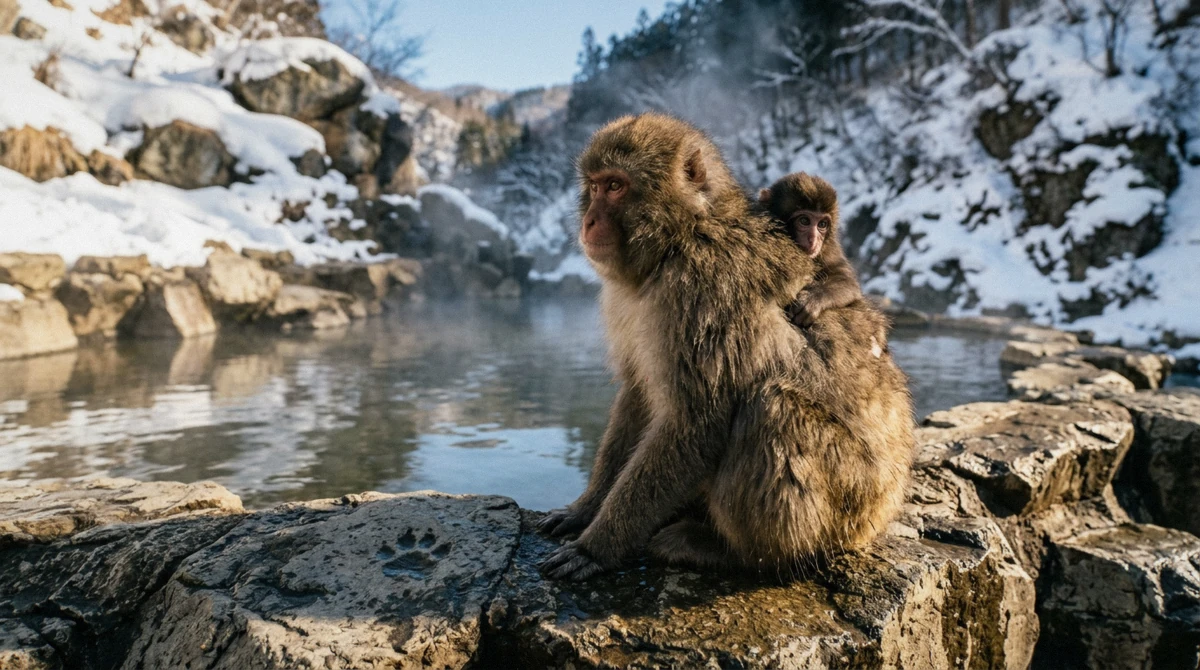
January and February are the best time to visit Jigokudani Monkey Park: the deepest snow of the year and the most reliable bathing, because cold-weather behaviour is what pulls the troop into the hot pool in the first place. Spring is the gentler runner-up, when around 30 babies are born to the troop each year and the crowds thin out. Autumn, October and November, is the window to plan around rather than for, since mating season and forest food pull the troop away from the pool on more days than any other stretch of the year.
Key takeaways
- January and February: deepest snow, most bathing, and the busiest month at the gate
- Spring (March to May): around 30 babies born to the troop each year, quieter than winter
- Summer (June to August): monkeys present nearly every day but rarely in the water
- Autumn (October and November): mating season and forest food mean more no-show days; a winter private tour with a local guide runs from November
- Best time of day: aim for 11:00 to 15:00 in autumn, and arrive early in the winter peak
- Park hours shift with the season: 9:00 to 16:00 from November through March, 8:30 to 17:00 the rest of the year
Month by Month at Jigokudani
The Verdict column below is the short answer for that month; read the two columns beside it before you book, since a warm-sounding month and a genuinely crowded one are not the same problem.
The month-by-month table
These are typical daytime highs for the Yamanouchi area, not a forecast for your travel dates, and "what the monkeys are doing" is troop behaviour on an average day in that month rather than a guarantee for any single visit.
| Month | Daytime High | What the Monkeys Are Doing | Crowds |
|---|---|---|---|
| January | 3°C (37°F) | In the pool most of the day, deep snow on the ground | Peak (New Year week) |
| February | 4°C (39°F) | Peak bathing, the coldest, snowiest stretch of the year | Peak |
| March | 9°C (48°F) | Bathing tapers off as the valley starts to thaw | High |
| April | 17°C (63°F) | Mostly out of the water, pregnant females visible | Moderate |
| May | 22°C (72°F) | Births underway, new mothers carrying newborns | Moderate (Golden Week spike) |
| June | 25°C (77°F) | Rarely in the water, valley turning green | Low |
| July | 29°C (84°F) | Foraging in the forest, brief water crossings only | Low |
| August | 30°C (86°F) | Warmest month, troop keeps to the shade | Moderate (summer holidays) |
| September | 25°C (77°F) | Active but seldom bathing | Low |
| October | 18°C (64°F) | Mating season begins, more time spent in the forest | Moderate |
| November | 12°C (54°F) | Peak no-show risk; forest food pulls the troop away | Moderate |
| December | 6°C (43°F) | Cold returns and bathing starts to pick up again | High (building toward peak) |
Figures are typical daytime highs, Japan Meteorological Agency normals for the Yamanouchi area, not a forecast for a specific date; check the current forecast close to your dates. Park hours also change with the season: 8:30 to 17:00 from April through October, 9:00 to 16:00 from November through March, and arrive at least 30 minutes before closing either way. Read against the table, the pattern is straightforward: cold drives the bathing, and the crowd peaks land in the same two months as the best conditions, so book ahead if you are set on January or February.
The Four Seasons at Jigokudani
Each season earns a different reason to go, and each one has an honest trade-off attached.
The short version of all four, side by side, before the detail below.
| Season | Months | Typical High | Best For |
|---|---|---|---|
| Winter | December to February | 3°C to 6°C | Deepest snow, most bathing |
| Spring | March to May | 9°C to 22°C | Newborn monkeys, thinner crowds |
| Summer | June to August | 25°C to 30°C | Quietest season, green valley |
| Autumn | September to November | 12°C to 25°C | Fewest crowds, least predictable sightings |
Winter (December to February): Deepest Snow, Most Bathing
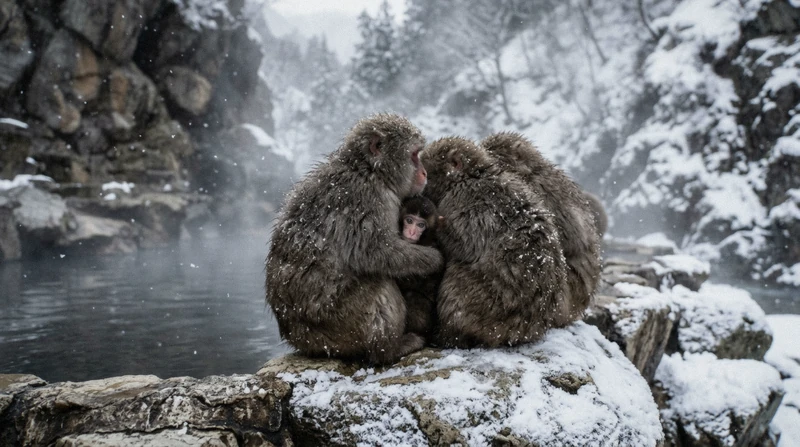
This is the postcard season and the reason most people search for the best time to visit Jigokudani Monkey Park in the first place. Daytime highs run 3°C to 6°C, the valley holds real snow, and the troop spends long stretches in the pool because cold-weather bathing is genuinely what draws them there. It is also the busiest stretch of the year, so arrive early and book lodging well ahead, especially over the New Year week.
A winter private tour with a local guide runs November through May and is built around exactly this window.
Spring (March to May): Newborns, Thinner Crowds
Bathing tapers off as the snow melts through March, and by May the valley is green again. What spring adds is new life: around 30 babies are born to the troop each year, mostly in this window, and mothers carrying newborns are a common sight through late spring. Crowds are noticeably thinner than winter outside the early-May Golden Week spike, and the trail is easier underfoot without the ice.
The trade-off is honest: fewer monkeys in the water, more just moving through the forest.
Summer (June to August): Quiet, Green, Rarely Wet
This is the quietest season at the gate and the greenest version of the valley, but the monkeys are rarely in the water in warm weather, since bathing here is a cold-weather behaviour rather than a year-round habit. Expect to see the troop foraging and moving through the forest instead. August is the warmest month at 30°C and days can be humid; go early to avoid both the heat and the modest summer-holiday crowd bump.
Autumn (October and November): The Honest Gamble
October and November bring mating season and a forest full of natural food, and the combination means more days when the troop simply is not at the pool. This is the one window worth planning around rather than for. If autumn is the only time that fits your trip, aim for the middle of the day and check the park's weekly forecast before you go; a guided afternoon tour at least puts a guide's read on the day's odds between you and the trail.
Which Season Fits What You Want
If You want the classic snow-and-steam photos
January to February, when the pool is busiest and the snow is deepest
If You want to see baby monkeys
Spring, March to May, when the troop's roughly 30 yearly newborns are with their mothers
If You want the quietest visit
Summer, June to August, thinnest crowds, monkeys mostly out of the water
If You can only travel in October or November
Go in, but treat it as a gamble; check the forecast, aim midday, and don't build the whole trip around a sighting
If You want good conditions without the peak-season prices
Late March or early December, cold enough for some bathing, before the crowds peak
Best Time of Day
Time of day matters more in some seasons than others. In autumn, when the troop is more likely to be out in the forest, aim for the middle of the day, roughly 11:00 to 15:00, since that is when feeding rounds are most likely to draw the monkeys back to the pool area. In the winter peak, the opposite logic applies: arrive as close to opening as you can manage, both because the trail and viewing deck are calmest before the day's crowd builds and because the coldest morning hours are when bathing is most consistent.
Outside those two extremes, midday still tends to be the safer bet, since it lines up with the daily feeding schedule the park's staff work to.
What Actually Affects Sightings
Most people assume rain or a grey sky ruins the day. It is actually temperature that decides whether the troop bathes, not precipitation: a cold, dry day in January reliably brings monkeys into the hot pool, while a mild, overcast day in the same month can leave the pool half empty because the cold-weather trigger simply is not there. That is also why autumn is unpredictable in a way winter and summer are not: October and November sit in a temperature band that is neither reliably cold enough to trigger bathing nor warm enough to rule it out, on top of a troop that is busier in the forest during mating season.
None of this comes with a guarantee. Jigokudani is a wild troop, not a zoo, and no operator or the park itself will promise a sighting on any given day. The park keeps a weekly monkey appearance forecast and a live camera on its official site, which is worth checking the morning of your visit if the date is flexible at all.
Weather can change what your gear list looks like more than what it does to the odds of seeing the troop, and that side of planning gets its own guide on what to wear to the snow monkey park.
If timing is the only variable you can control, the short version holds up across every source we checked: go cold, go early, and if you can only travel in autumn, go in expecting a gamble rather than a guarantee. For readers still weighing whether the whole trip is worth the detour from Tokyo or Nagano City in the first place, that question gets a straight answer on our verdict page, and the fastest way to lock in a date is to book a Nagano monkey park tour for whichever window fits your trip. The full Nagano monkey park tour comparison lists every departure point and season side by side.
Questions About Timing Your Visit
What is the best month to see the snow monkeys?
January and February. Cold-weather bathing is what draws the troop into the hot pool, and those two months carry the deepest snow and the coldest daytime highs of the year, which makes them the most reliable months for the classic scene.
Do the monkeys bathe in summer?
Rarely. Bathing is a cold-weather behaviour, and summer daytime highs run 25°C to 30°C, warm enough that the troop has little reason to sit in hot water. Expect to see monkeys in the forest and around the valley instead of in the pool.
When are baby monkeys born?
Mostly in spring. Around 30 babies are born to the troop each year, and mothers carrying newborns are a common sight from March through May, tapering off as the season moves toward summer.
Is autumn a bad time to visit?
Not bad, but the least predictable. October and November bring mating season and a forest full of natural food, both of which pull the troop away from the pool more often than in other months. Aim for midday and check the forecast if this is your only window.
What time of day is best at the park?
In autumn, aim for 11:00 to 15:00, when feeding rounds are most likely to bring the troop back to the pool. In the winter peak, arrive close to opening for calmer viewing and the coldest, most bathing-friendly hours of the day.
Does the park close for New Year?
No. Jigokudani Monkey Park is open every day of the year, including New Year's week, which is also one of the busiest stretches at the gate. Arrive early if you are visiting over that period.
How do I check conditions before I go?
The park runs a weekly monkey appearance forecast and a live camera on its own site, worth a look the morning of your visit if your dates are flexible. It will not guarantee a sighting, but it is the most current read available.